

APUSHSLIDES BLOG

What Does it Mean to be American?
This year I am making a commitment to emphasize the theme American National Identity in my APUSH classes and will attempt to do so with a recurring project titled “What does it mean to be American?” American National Identity is a difficult concept to explain because it has changed across time periods and does not have the same meaning to everyone in the same time period. My hope is that through this project students will start to make those connections earlier in the school year.

Primary Source Reviews
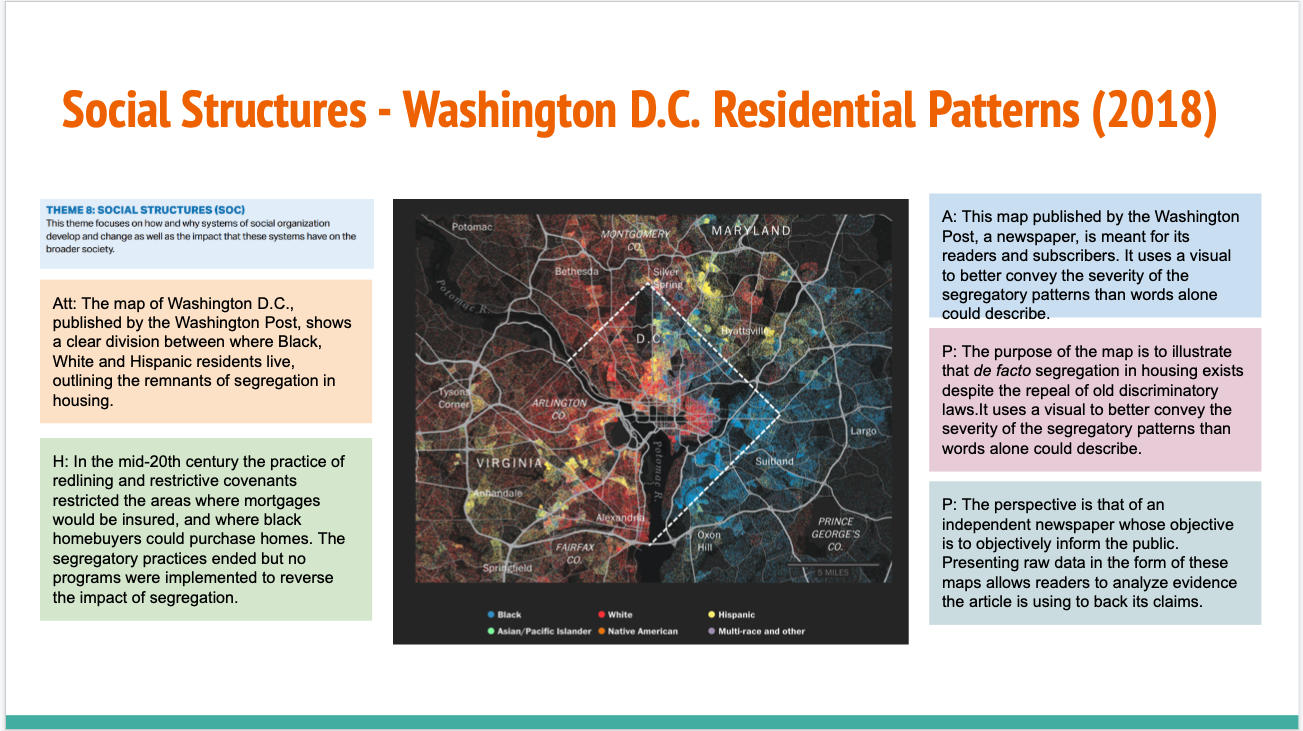
The more comfortable that students are in reading and interpreting primary sources, the better prepared they will be for the exam. For this reason, APUSHslides has started to create new review videos that are meant to help students practice analyzing primary sources, and also meant to provide an example on how a certain themes are prevalent throughout each time period. Each video will cover one document, summarize the content, and analyze it based on the criteria in the DBQ rubric.

Responding to Short Answer Questions
The Short Answer Question (SAQ) section of the AP exam is made up of a 40 minute period where students will answer three question sets for 20% of the possible points in the APUSH exam.

Putting Together a Course Review
As the month of April begins, it’s also time to start thinking about a course content review (course skills review is a different monster) that would be beneficial for preparing for the AP exam. There’s several approaches one can take, based on how much time is left before the exam, and APUSHslides can help in whichever approach you choose.

Using Secondary Sources in Class Instruction
Secondary sources in a history class are necessary in delivering the necessary information to students in an efficient way. They are meant to work in conjunction with the use of primary sources in instruction. A class taught completely with primary sources may feel scattered and without direction, while a class taught solely with secondary sources may lack depth and use of analysis. Secondary sources are the lines that connect the dots that are the primary sources. With that said, students’ comfort level with secondary sources can greatly impact their understanding of history and ultimately their performance on the AP exam.

APUSH Slides Updates
Well this year has certainly been unlike any other, and I hope you’ve been holding up. All of the slides up until the end of Period 8 have been embedded into their respective pages.

APUSH Course Pacing
One of the first hurdles to clear in preparing to teach AP United States History is trying to figure out how to fit all the content before the exam. Before the College Board updated the Course and Exam Description (CED), teachers would do their best to spend a proportionate amount of time on material based on its prevalence in the test.
Using Primary Source Documents
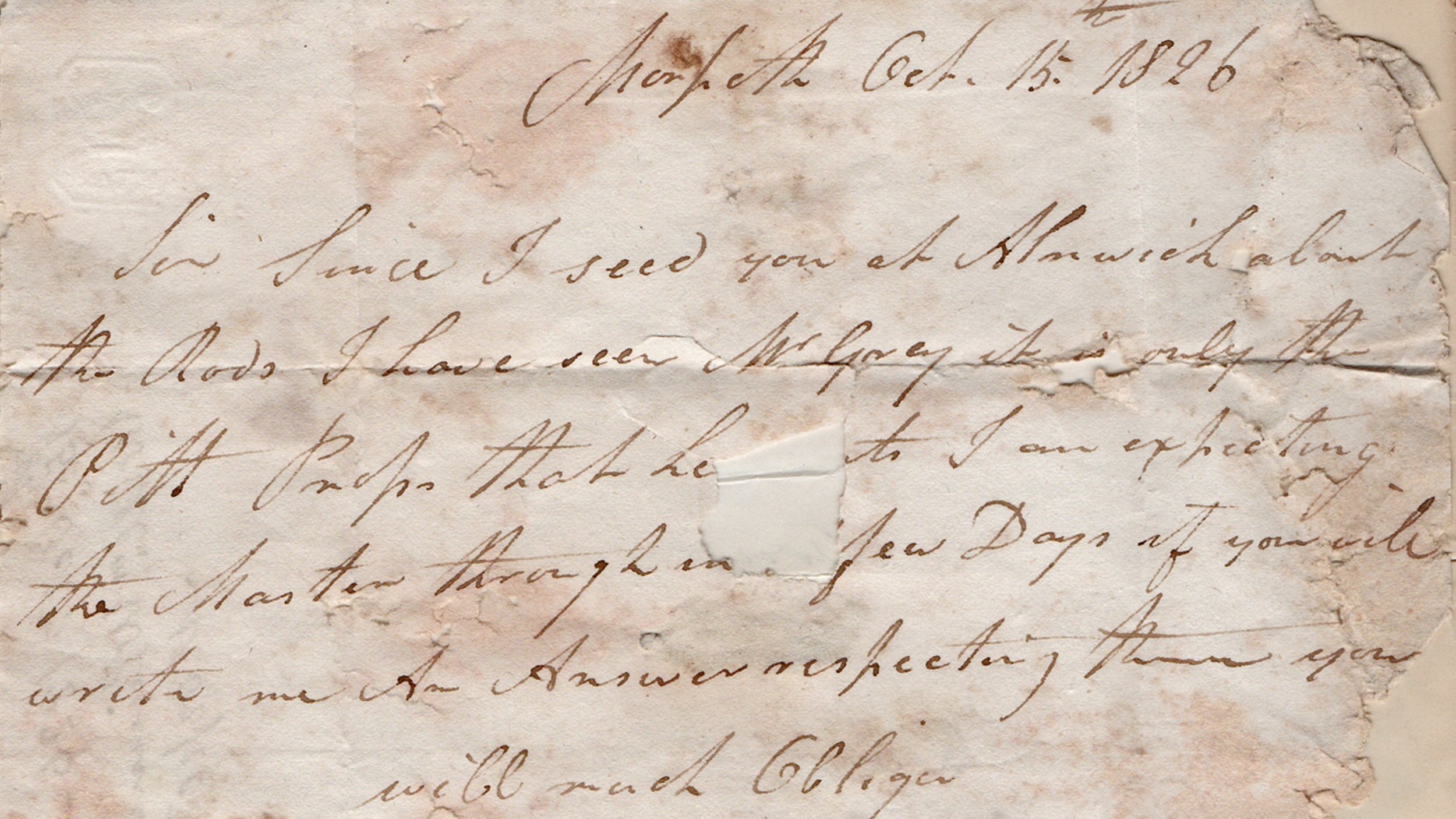
The use of primary source documents in AP Classrooms has never been more important. If the 2021 Exam is going to be anything like the 2020 Exam where the Document Based Question (DBQ) was the entirety of the test, students need to consistent practice with interpreting and analyzing primary sources.
-
January 2026
- Jan 21, 2026 Teaching HBCUs Through Images, Research, and Student Persuasion Jan 21, 2026
- Jan 20, 2026 AP AfAM Unit 3 Supplemental Videos Jan 20, 2026
-
September 2025
- Sep 23, 2025 AP AfAM Unit 2 Supplemental Videos (pt. 1) Sep 23, 2025
-
August 2025
- Aug 9, 2025 AP AfAM Unit 1 Supplemental Videos Aug 9, 2025
-
February 2025
- Feb 28, 2025 AP AfAM Unit 4 Supplemental Videos Feb 28, 2025
-
September 2024
- Sep 19, 2024 Let Us Descend Project Sep 19, 2024
-
August 2024
- Aug 9, 2024 AI Classroom Policy Aug 9, 2024
-
July 2024
- Jul 8, 2024 Introducing AP African American Studies on APUSHslides.com Jul 8, 2024
-
September 2023
- Sep 30, 2023 Introducing SlidesBot Sep 30, 2023
-
August 2023
- Aug 27, 2023 Generative AI Policy in APUSH Aug 27, 2023
- Aug 5, 2023 Comprehensive Writing Guide Aug 5, 2023
-
July 2023
- Jul 29, 2023 What Does it Mean to be American? Jul 29, 2023
-
September 2022
- Sep 13, 2022 Writing Context in an Introduction Sep 13, 2022
-
May 2021
- May 12, 2021 Primary Source Reviews May 12, 2021
-
April 2021
- Apr 13, 2021 Responding to Short Answer Questions Apr 13, 2021
-
March 2021
- Mar 30, 2021 Putting Together a Course Review Mar 30, 2021
- Mar 25, 2021 Using Secondary Sources in Class Instruction Mar 25, 2021
- Mar 24, 2021 APUSH Slides Updates Mar 24, 2021
-
August 2020
- Aug 19, 2020 APUSH Course Pacing Aug 19, 2020
- Aug 18, 2020 Using Primary Source Documents Aug 18, 2020
- Aug 17, 2020 Getting The Most Out Of APUSHslides.com Aug 17, 2020